
Upskilling is No Longer Optional: Why Continuous Learning Matters at Every Level
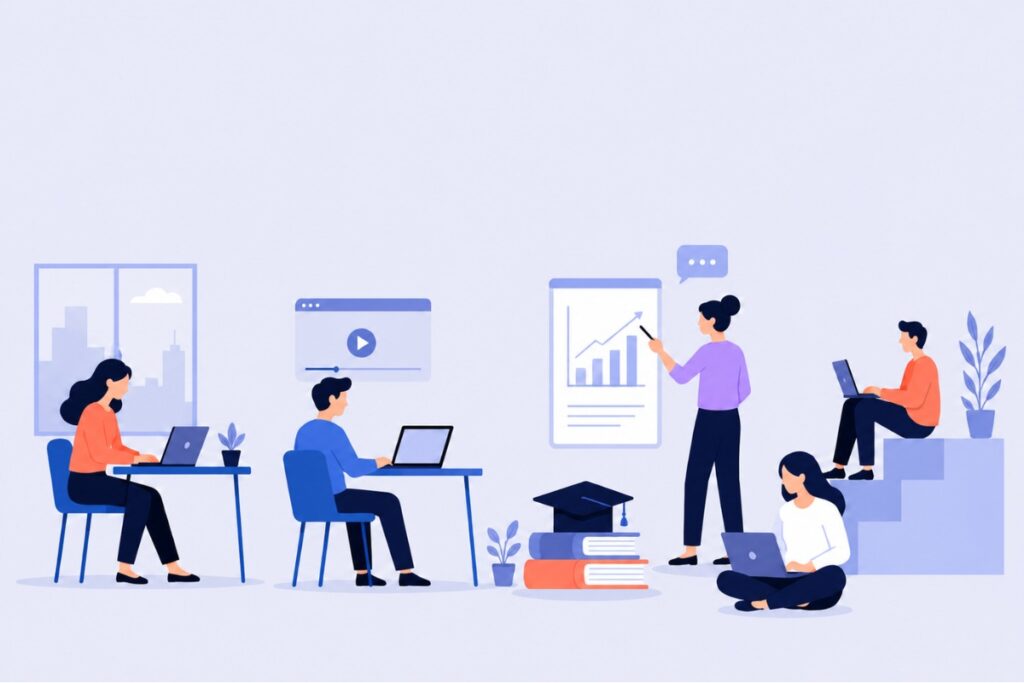
The workplace is changing faster than ever. New technologies, AI tools, automation, changing customer expectations, and evolving business models are redefining how organizations operate. In this environment, staying updated is no longer a choice—it
is a necessity.
Many professionals assume that learning is primarily for freshers or junior employees. The reality is quite different. Learning and development are equally important for middle managers, senior leaders, and CXOs. The skills needed to
succeed today may not be sufficient tomorrow.
According to global workforce studies, nearly half of the skills required for many jobs are expected to evolve significantly within the next few years. Organizations that invest in learning consistently report stronger innovation, better employee engagement, and improved retention.
Why Continuous Learning Matters
Organizations that encourage learning often experience:
- Higher employee productivity
- Better innovation and problem-solving
- Increased employee retention
- Stronger leadership pipelines
- Faster adaptation to market changes
For employees, continuous learning helps:
- Improve job performance
- Stay relevant in a changing industry
- Increase career growth opportunities
- Build confidence and expertise
- Prepare for future leadership roles
Learning Is Not Just About Training Programs
Modern learning extends beyond classrooms and workshops.
Today’s professionals learn through:
- Industry conferences and webinars
- Peer-to-peer knowledge sharing
- Mentorship programs
- Professional certifications
- Podcasts, articles, and research reports
- Cross-functional projects and assignments
The most successful professionals are often the most curious learners.
Building a Learning Culture
Forward-thinking organizations are embedding learning into everyday work rather
than treating it as a yearly activity.
Key characteristics of a strong learning culture include:
- Leadership support for learning initiatives
- Easy access to knowledge resources
- Encouragement for experimentation
- Recognition of skill development efforts
- Continuous feedback and coaching
When learning becomes part of the culture, organizations become more agile and
future-ready.
The TECH SANG Perspective
At TECH SANG, we believe learning should be practical, relevant, and aligned withbusiness outcomes. The goal is not merely to attend training programs but to build capabilities that create measurable impact.
Organizations that learn continuously are better equipped to navigate uncertainty, embrace change, and create sustainable growth.